
Make the no-go zone safe to touch again.
Targeted refactors of the specific subsystems that have become bottlenecks for feature velocity — the modules where every change feels risky and everything takes three times longer. We work under a safety net of tests and feature flags, in small behavior-preserving steps, and we prove the payback with before/after metrics.
Every codebase has a room nobody wants to enter.
You know the one: the subsystem where changes feel like defusing a bomb, where a one-day feature becomes a three-day feature because two of those days are spent being careful. It got that way honestly — deadlines, departures, a design that made sense once. But now it's a no-go zone that quietly taxes every roadmap that touches it. We don't tidy code for its own sake. We pick the specific subsystem that's slowing you down the most, put a safety net around it — tests first, feature flags for anything risky — and refactor it in small, reversible steps until it's safe to touch again. Then we show you the before/after numbers, because a refactor that can't prove its payback is just churn.
The code is slowing the whole team down.
Each symptom has the same fix — a targeted refactor of the subsystem behind the drag, done safely and measured.
- 01
A subsystem has become a no-go zone
We map the hotspot, put a safety net around it, and make it safe to touch again.
- 02
Features in one area take 3x longer
We attack the coupling and missing tests causing the drag — and measure the velocity gain.
- 03
Test coverage there is basically zero
We backfill characterization tests first, so every refactor has a seatbelt.
- 04
Every change risks breaking something
Small behavior-preserving steps behind flags — easy to review, instant to roll back.
- 05
Nobody can say if a cleanup was worth it
Explicit before/after metrics: velocity, defect rate, coverage, benchmarks.
A safe path through the room nobody enters.
Four concrete deliverables, aimed at the subsystem that's costing you the most velocity.

Refactor plan
The target subsystem mapped, with an honest risk assessment for each step.

Test coverage backfill
Characterization tests that pin down today's behavior before anything moves.

Refactor with feature flags
Small, behavior-preserving changes shipped safely behind flags.

Before / after comparison
A velocity comparison — and the metrics — that prove the payback.
The same loop, every subsystem.
- 1Assess
- 2Cover with tests
- 3Refactor
- 4Verify
- 5Measure
No big-bang rewrite and no surprises: assess the hotspot, cover the behavior with tests, refactor in small steps, verify nothing changed, then measure the payback. The loop is boring on purpose — boring is what keeps a live system safe while it improves.
The specific subsystem behind the drag.
We don't 'clean up the codebase' in the abstract — that's an open-ended cleanup with no finish line. We find the hotspot: the module that churns the most, breaks the most, and slows features down the most. Hotspot and coupling analysis turns a vague sense of dread into a concrete target, so the work stays bounded and the payback stays measurable.
- Hotspot analysis — what actually churns and breaks
- Coupling untangled where it ripples worst
- Coverage gaps identified up front
- A refactor plan with an honest risk assessment
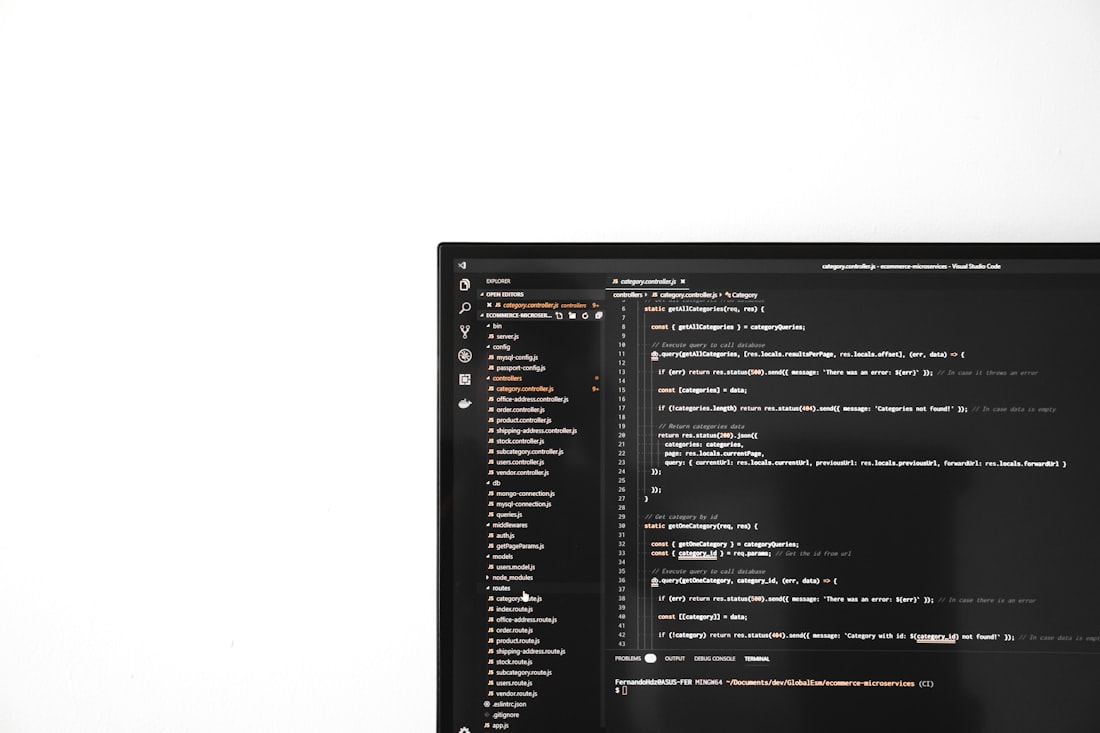

Tests before structure, every time.
Safe refactoring means the externally observable behavior stays the same — and the only way to prove that is tests that fail when it doesn't. So before we touch the structure we backfill coverage, including characterization tests that capture what the code does today, quirks included. The tests are the seatbelt; we put them on before we drive.
- Coverage backfilled on the target subsystem
- Characterization tests pin down current behavior
- Risky changes shipped behind feature flags
- Incremental — no big-bang rewrite branch
Small, reviewed, reversible — repeatedly.
The refactor moves in small steps that each preserve behavior, get reviewed, and ship — rather than a giant branch that lingers for a month and lands in one terrifying release. Small and frequent is safer and more visible: easier to review, easier to revert, and you watch the no-go zone become navigable in real time.
- Small steps, not a stop-the-world rewrite
- Behavior-preserving — green tests at every step
- Reviewed like any production change
- Shipped continuously, with instant rollback

Map it, net it, move it, prove it.
Find the hotspot
Churn, defects, and coupling tell us which subsystem is really costing you velocity — not a guess.
Plan with risk in view
A refactor plan that lists the increments, the risks, and the safety net for each step.
Backfill the tests
Characterization tests capture today's behavior so every change has something to refactor against.
Refactor in small steps
Behavior-preserving changes, reviewed and shipped behind flags — assess, cover, refactor, verify, measure.
Prove the payback
Before/after velocity, defect rate, coverage, and benchmarks — the metrics are part of the deliverable.
One part of the code taxes everything you build.
A subsystem is a no-go zone
Everyone routes around the module where changes feel like defusing a bomb — and the avoidance is costing you.
Features in one area take 3x longer
The same kind of work ships fast everywhere else, but in this corner it crawls — and you know why.
Test coverage there is low
There's nothing to catch a regression, so every change is a careful, manual, nerve-wracking exercise.


Boring discipline, measurable payback.
The things teams ask first.

Make the no-go zone safe to touch again.
Tell us which subsystem everyone routes around — the one where features take three times longer. We'll map the hotspot, put a safety net around it, refactor it in small reversible steps, and show you the before/after numbers that prove the payback.